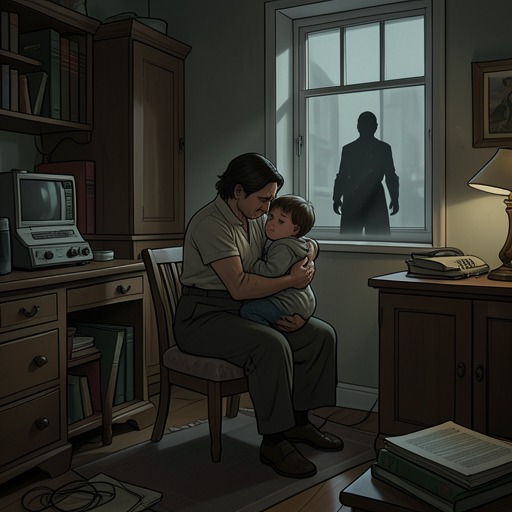
“Parenthood is a story two people start telling together”
The ChangelingThe expression that “parenthood is a story two people start telling together” gives Lillian Kagwa and Brian West’s becoming a family a beginning before the birth of their son. It locates that beginning in a shared act of recognition and imagination: two people with painful histories find themselves together in a movie theater and start to picture a life beyond those histories.
From a First Date to a Shared Future
Late in 1976, after knowing each other for years, Brian and Lillian finally went on a date. Brian spoke earnestly about wanting children and becoming a husband and father; he had sensed since meeting Lillian at Glamour Time that she would be a wonderful mother. Lillian gently reminded him that this was their first date and suggested postponing wedding plans until after the movie. Brian laughed rather than taking offense. The ease of that response mattered: it was the moment Lillian truly fell for him.
The movie was Rocky, Brian’s choice rather than Lillian’s. As she began to enjoy it, she recognized something of herself in its fierce dreamer. The film became a way for the two to encounter each other’s pasts without being defined by them. Brian had told her about being robbed by his father; Lillian had told him about Arthur being shot in a car. Sitting together in a dark Times Square theater, they appeared to themselves as a pair of survivors. In that scene, the expression about parenthood names a connection already taking shape: a shared dream, not yet a child in arms.
The Story Begins Before Birth
The passage distinguishes the start of parenthood from the later moment of biological conception. Lillian and Brian would not have sex for another three hours, but the narrative locates their first child’s beginning in the thought and shared dream formed while they held hands in the theater. The expression therefore makes parenthood relational and imaginative as well as biological: Brian’s wish for a family becomes something Lillian can meet on her own terms, after his laughter has made the date feel less like a proposal and more like a meeting between equals.
The story they begin together soon acquires an everyday form. By April 1977, Lillian was showing, and Brian had found them a two-bedroom apartment in Jackson Heights. Their son was born in September. They named him Apollo, rather than Rocky, which Brian thought would be an odd name for a half-black child. Brian carried the newborn in the crook of one arm and called him a god and his little sun. The affectionate gesture fulfills the family dream introduced at the theater, while the narrator’s qualification that they lived happily ever after only for a few years places a limit on any promise of permanence.
Meaning and Limits
The expression joins private histories to a future neither person can make alone. The date gathers Brian’s childhood experience of betrayal and Lillian’s account of Arthur’s shooting into a moment of companionship; it does not erase those experiences, but gives them a place in the story the couple starts telling together. The sequence also keeps Lillian’s choice visible. Brian’s desire for children is stated early, but her caution at dinner is met with laughter rather than anger, and her later holding of his hand marks a mutual movement toward intimacy.
The phrase is thus both tender and provisional. It describes the beginning of a family as a shared act, while the later account of Apollo’s birth and Brian’s absence by the boy’s fourth birthday shows that beginning a story together cannot guarantee how long the two people will remain together. The expression’s significance rests in that contrast: it honors the reality of their shared hope without turning it into a promise of an unbroken happy ending.